Allison Minger • November 9, 2026
A Newcomer's Guide to U.S. Federal Holidays: What International Nurses Should Know
Moving to a new country involves more than starting a new job. It also means learning the rhythms, traditions, and everyday customs that shape daily life. One of the first things many international nurses notice after arriving in the United States is how federal holidays affect schools, banks, government offices, and healthcare facilities.
Whether you're preparing for relocation or have recently arrived, this guide will help you understand
U.S. federal holidays, how they may impact your work schedule, and what cultural traditions you can expect as you settle into life in America.
What Are the U.S. Federal Holidays?
Federal holidays are nationally recognized days when U.S. government offices close and many public services operate on modified schedules. While not every employer is required to observe these holidays, they often influence schools, banks, mail delivery, and community events throughout the country.
For international nurses in the U.S., understanding these holidays can help you plan appointments, family activities, travel, and work schedules more effectively.
The 11 U.S. Federal Holidays
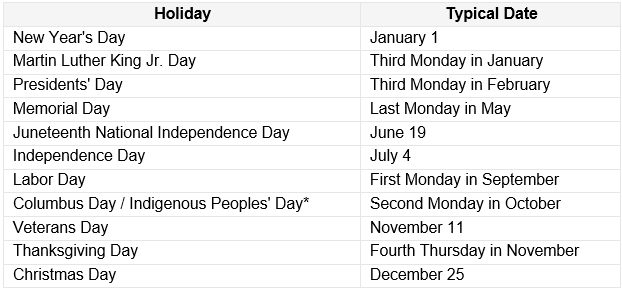
*Observance varies by state and community.
How Do U.S. Federal Holidays Affect Daily Life?
As you settle into your new American life, you'll quickly notice that federal holidays influence many everyday services.
Schools
Most public schools are closed for federal holidays. Some holidays, including Thanksgiving, Christmas, and Spring Break periods, may involve several days off.
If you are relocating with children, it's helpful to review your local school calendar so you can plan childcare and family activities in advance.
Government Offices
Federal government offices typically close on federal holidays. This may affect services such as:
- Passport processing
- Social Security offices
- Department of Motor Vehicles (DMV) appointments
- Immigration or licensing-related appointments
If you need to complete important paperwork, try to avoid scheduling appointments around major holidays.
Banks and Financial Services
Most banks close on federal holidays, although ATMs and online banking remain available.
For nurses relocating to the United States, this is especially important during your first few months when you may be:
- Opening bank accounts
- Receiving initial paychecks
- Transferring funds internationally
- Managing relocation expenses
Planning ahead can help prevent unnecessary delays.
Postal and Public Services
The United States Postal Service (USPS) generally does not deliver regular mail on federal holidays. Other services may operate on limited schedules as well.
Do Hospitals Close on Federal Holidays?
No. Hospitals remain open on federal holidays and continue providing patient care 24 hours a day, 365 days a year. Patients still need care on Thanksgiving, Christmas, New Year's Day, and other holidays, so healthcare facilities maintain staffing throughout the year.
However, some outpatient clinics, physician offices, and non-emergency healthcare services may operate on reduced hours or close on certain holidays. Schedules vary by facility and department.
Holiday Scheduling for Nurses
Because hospitals remain open on federal holidays, nurses and other healthcare professionals may be scheduled to work during these times.
Every hospital has its own scheduling policies, but many facilities aim to distribute holiday shifts fairly among nursing staff.
Common approaches include:
- Rotating holiday assignments
- Splitting major holidays between staff members
- Offering voluntary sign-ups for holiday shifts
- Alternating holiday schedules from year to year
Your nurse manager or HR team will explain your facility's specific holiday scheduling policies during orientation.
Holiday Pay for Nurses in the United States
Another important topic for international nurses transitioning to the U.S. is holiday compensation.
Many hospitals offer some form of holiday pay for eligible employees who work on designated holidays. Policies vary by employer and may depend on factors such as:
- Employment status
- Union agreements
- Facility policies
- Hours worked
Some healthcare organizations offer:
- Premium pay rates
- Additional compensation for holiday shifts
- Alternative paid time off arrangements
Because holiday pay and scheduling policies vary by healthcare facility, it's always best to review your employer's policies or speak with your HR team for specific details.
Popular American Holidays and Traditions
Beyond understanding schedules and closures, learning about American holiday traditions can help you feel more connected to your new community.
New Year's Day
Many Americans celebrate the beginning of the year with family gatherings, parties, and personal goals for the year ahead.
Memorial Day
Observed in May, Memorial Day honors military personnel who died in service to the United States. Many families spend the long weekend outdoors with barbecues and community events.
Independence Day (July 4)
Often called "the Fourth of July," this holiday celebrates American independence.
Common traditions include:
- Fireworks
- Parades
- Family gatherings
- Cookouts and picnics
It's one of the most widely celebrated holidays in the country.
Labor Day
Labor Day recognizes the contributions of workers and is often considered the unofficial end of summer.
Many families use the long weekend for travel and outdoor activities.
Thanksgiving
Thanksgiving is one of America's most important family-centered holidays.
Traditions often include:
- Large family meals
- Giving thanks
- Community celebrations
- Volunteering opportunities
For many international nurses, Thanksgiving is a meaningful opportunity to connect with coworkers, neighbors, and local communities.
Christmas
Christmas celebrations vary by family and cultural background but commonly include:
- Gift giving
- Decorations and lights
- Family gatherings
- Religious observances for those who celebrate
Hospitals remain open, so some nurses work holiday shifts while others celebrate with family before or after their scheduled workdays.
4 Tips for International Nurses During U.S. Holidays
As you adjust to life in a new country, these simple tips can make holiday seasons easier to navigate:
- Plan Ahead: Holiday weekends can affect appointments, banking, travel, and government services. Check calendars in advance when scheduling important tasks.
- Ask Questions: Your coworkers can be a great resource for understanding local traditions and workplace expectations.
- Participate When You Feel Comfortable: You don't have to know every tradition right away. Many nurses enjoy attending community events, trying holiday foods, or celebrating with coworkers as they become familiar with American culture.
- Stay Connected With Family: Holidays can sometimes feel emotional when you're far from home. Scheduling video calls or sharing your experiences with loved ones can help you maintain those important connections.
More Than a Career Move
At WorldWide HealthStaff Solutions (WWHS), we know that relocating to the United States is about more than finding a job. It's about building a future, creating stability for your family, and feeling confident in your new environment.
For more than 25 years, we've helped healthcare professionals navigate recruitment, immigration, licensure, relocation, and life in the United States. Our team is here to support you every step of the way.
Whether you're preparing to move or have recently arrived, understanding U.S. federal holidays is one small but important step toward feeling at home in your new community.
Ready to start your U.S. nursing journey?
Sign up today to explore international nursing jobs and learn more about working in the United States.
Featured Blogs