Jennifer Melham • March 6, 2026
How International Nurses Can Work in the U.S.: Your 2026 Visa Preparation Checklist
The U.S. is facing a critical shortage of healthcare professionals, particularly registered nurses. The U.S. Bureau of Labor Statistics estimates a current deficit of about 190,000 nurses. To help address this gap, the United States offers employment-based immigration pathways for qualified international nurses. Because immigrant visas are subject to annual limits and per-country caps, wait times can vary by country of origin, as reflected in the Department of State’s monthly Visa Bulletin. Even when visa availability is favorable, the immigration process can still take time.
At the time of this publication, the monthly U.S. visa bulletin indicates an estimated timeline of about two years for most registered nurses, with longer wait times for applicants from India and China due to priority dates. While you can’t control government processing times, you can control how prepared you are!
The checklist below is intended primarily for nurses preparing to apply for U.S. opportunities or who are early in the process. If you are already working with a recruiter or have an application in progress, some steps may already be completed—but the guide can still help you stay organized and prepared for what comes next.
Your 2026 Month-by-Month Visa Journey Checklist (With Key Immigration Steps Included)
No matter when you begin this process, this guide will help you be more prepared. Remember too, you can always reach out to your WWHS advisor with any questions you might have at any point.
Month 1: Get Organized and Confirm Your Starting Point
This month is about clarity. You’re preparing the documents and structure you’ll need for every stage ahead and building your foundation for the full process.
Checklist
- Confirm your passport validity (ideally 12+ months before expiration)
- Gather your nursing diploma, transcript, and license documents
- Start a tracking sheet for tasks, deadlines, and document requests
- Confirm which U.S. state(s) you’re targeting (requirements can vary)
Month 2: Begin Your NCLEX Strategy
After completing your nursing degree and licensure, the NCLEX is one of the biggest milestones in the process. It’s also one of the most time-intensive steps—so consistent preparation matters.
Checklist
- Confirm NCLEX requirements for your chosen state or the state connected to your application if you are already working with a recruiter
- Create a weekly NCLEX study plan (and keep it sustainable)
- Track progress using practice questions and review sessions
- Organize all NCLEX registration emails and documentation
Month 3: Build Your Work History and Credential File
Your work history documents can take time to request, so it’s smart to start early. This will ensure you have strong documentation for your future employer and for government review. If you are already working with a recruiter, some of these documents may already be on file.
Checklist
- Request employment verification letters (with dates, role, and hours worked)
- Gather professional references and contact details
- Update your resume using a U.S.-friendly format
Month 4: Strengthen Your English Communication Skills
Clear communication and strong interview skills are important when pursuing nursing opportunities in the U.S. While an English exam is typically not required until after you are hired and a petition is filed, preparing your communication skills early can help you feel more confident throughout the process.
Checklist
- Practice speaking English regularly, especially in healthcare-related conversations
- Prepare for interviews by reviewing common clinical and patient communication scenarios
- Research whether your target state requires a specific English exam or valid test results
- Keep a folder for future test registrations, confirmations, and score reports if an exam becomes necessary
Month 5: Position Yourself for a U.S. Nursing Job Offer
Once your exam milestones are moving forward, the next major goal is positioning yourself for a job offer. A U.S. employer is essential because they initiate the immigrant visa request on your behalf.
Checklist
- Practice common U.S. nursing interview questions
- Prepare a strong “Tell me about yourself” answer
- Make sure your resume is updated and consistent with your documents
- Identify your preferred location(s), unit type, and shift
- Research cost of living and housing options in your destination
- If your state requires it, confirm your nursing license details match your passport name exactly
Month 6: Secure Your Job Offer and Begin the Immigration Process
This is the point where the process becomes more official and time-sensitive. Once you receive a job offer, your employer can begin the immigration process.
Registered nurses generally fall under the EB-3 category, which is for skilled workers with roles requiring at least 2 years of training or experience.
WorldWide HealthStaff Solutions (WWHS) Founder Ron Hoppe shares an important reminder:
“It’s really important if you want to shorten the timeline for yourself to arrive in the US that you have an immigration application started as soon as possible. Remember the concept of first-come, first-served, and the sooner you begin, obviously, the sooner the process will be completed.”
Checklist
- Confirm your offer details and next steps with your employer/recruiter
- Ask what documents you will need to submit and by what deadline
- Start your EB-3 immigration process as soon as possible
- Keep a record of every submission and confirmation
Month 7: Submit Your Required Documents Quickly and Accurately
After your job offer is in place, you will submit required documents online. These documents will be reviewed by U.S. Citizenship and Immigration Services (USCIS) and this stage may take several weeks.
Many avoidable delays happen here—usually because the of missing paperwork, mismatched names, or incomplete forms.
Checklist
- Submit requested documents as soon as possible
- Double-check spelling, dates, and name consistency across all documents
- Save copies of everything you submit
- Track timelines and follow up if needed
Digitizing and Tracking Your Visa Journey
If your recruiting agency has a candidate portal, you can typically upload documents directly there, which allows your case manager to track everything on the backend.
This step alone can prevent delays later, and WWHS can help! Download the WorldWide Guide app, the first of its kind candidate portal app for international nurses, for easy access to all of your documents and information.
Download on Google Play | Get the iPhone App
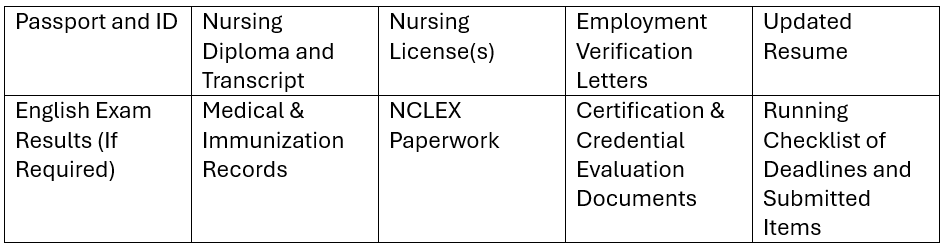
Create a folder (digital + backup) for your:
Month 8: Work on Your Health Care Worker Certification
Commonly known as VisaScreen, your health care worker certification is a required credential verification for many internationally educated nurses. It confirms your credentials and strengthens the legitimacy of your application.
Checklist
- Review certification requirements and start gathering materials early
- Request any needed school or licensing verifications
- Track what has been submitted and what is still pending
- Keep your certification documents in one dedicated folder
Month 9: Prepare for I-140 Petition Progress
After documents are submitted and reviewed, the I-140 petition stage is a major milestone. Approval signals significant progress in your immigration process.
Checklist
- Stay responsive to your employer/recruiter in case additional documents are requested
- Keep your contact information up to date
- Continue strengthening English communication
- Continue working at the bedside and maintaining direct patient care roles
- Stay organized with a clear timeline of what has been filed and when
Month 10: Get Ready for Your Visa Interview and Medical Requirements
The final stretch often includes scheduling and preparing for your visa interview and completing medical examinations. Preparation helps this stage feel more manageable.
Checklist
- Gather immunization and medical records
- Plan for required medical exams and timeline
- Organize interview documents and copies
- Practice clear, confident interview communication
Month 11: Final Checks and Pre-Arrival Planning
Even after major approvals, there are practical steps you can take to make your arrival easier and ensure a smooth transition into the U.S.
Checklist
- Create a packing plan and arrival checklist
- Organize printed copies of your most important documents
- Confirm any final travel or onboarding instructions
Month 12: Prepare for Your First 30 Days as a Nurse in the U.S.
Your first month matters not because you need to be perfect, but because confidence grows faster when you feel prepared.
Checklist
- Create a “first 30 days” budget and schedule
- Review workplace expectations and communication norms
- Keep your documents accessible for onboarding
- Stay connected with your support system as you settle in
A Final Note for 2026 Applicants
Immigration timelines can vary, and it’s important to stay informed about government updates on immigration and visas. The most important thing to remember throughout the process is this: the waiting periods do not mean you are stuck. They are your opportunity to stay prepared, organized, and ready for the next step when it arrives.
If you’re ready to start your journey with a trusted international direct-hire agency, for guidance, encouragement, and practical support, sign up with WWHS today and take the first step toward your U.S. nursing career with confidence. We are here for you every step of the way, from your first conversation to your first day on the unit.
Featured Blogs