Allison Minger • June 9, 2026
What the New USCIS Update Means for Your Immigration Journey
Understanding Adjustment of Status and What Comes Next
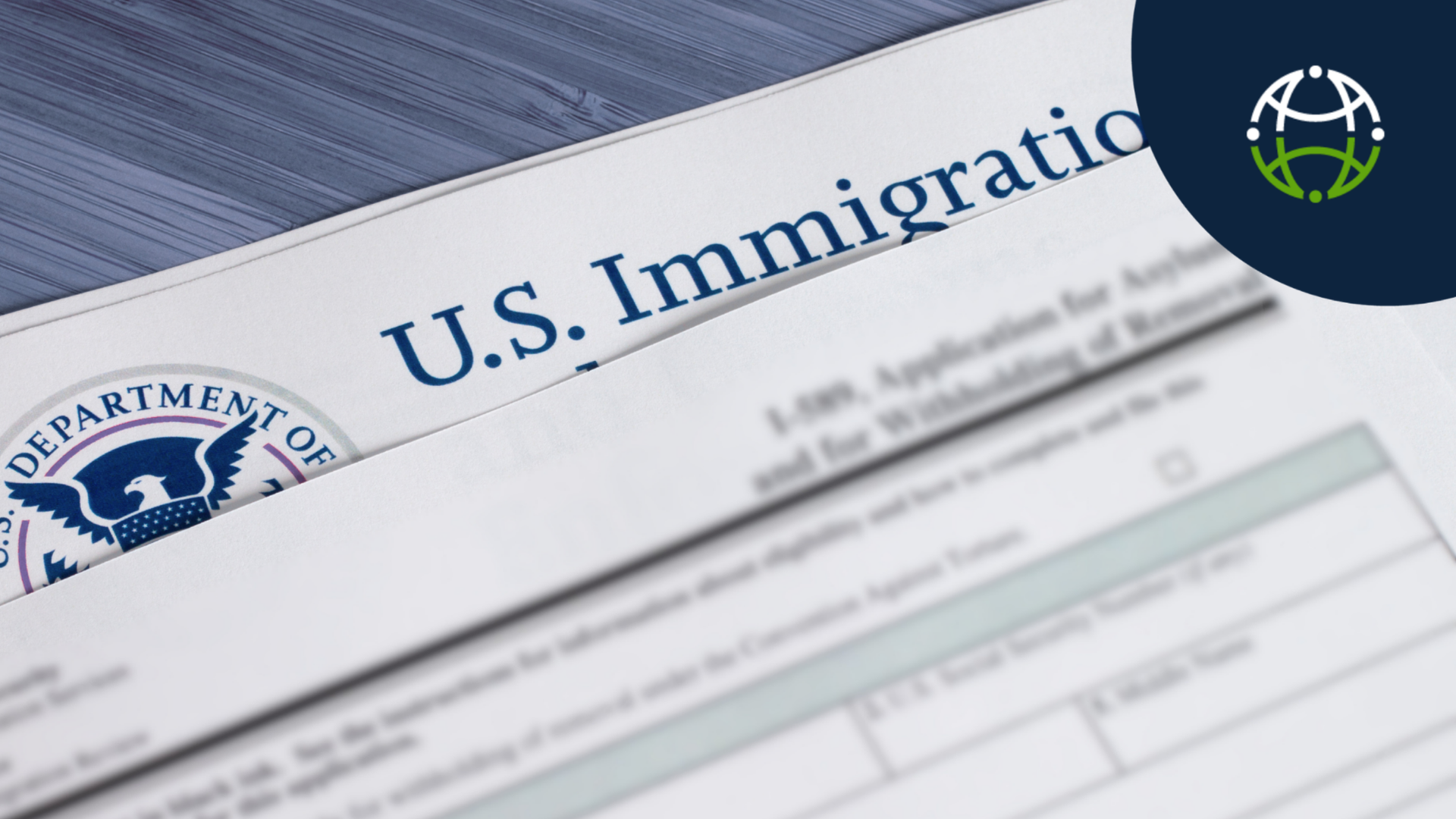
U.S. Citizenship and Immigration Services (USCIS) recently announced a policy update that affects how some individuals apply for a Green Card card.
The update emphasizes that many applicants may be expected to complete their Green Card process outside of the United States through consular processing, rather than applying from within the U.S. through Adjustment of Status (AOS).
However, recent clarification from USCIS confirms that this is not a blanket rule.
- Each case will still be reviewed individually
- Some applicants may still be eligible to complete an Adjustment of Status in the U.S.
This means your situation and your eligibility depend on your personal circumstances.
What Is Adjustment of Status (AOS)
Adjustment of Status allows individuals who are already in the United States on a temporary visa to apply for permanent residency, also known as a Green Card, without leaving the country.
Another option is consular processing, which means completing your Green Card application at a U.S. embassy or consulate in your home country.
Understanding the Difference between AOS and Consular Processing
Adjustment of Status
- Completed inside the U.S.
- May allow additional review or response (such as Requests for Evidence)
- Now subject to a more detailed and heightened discretionary evaluation on a case-by-case basis
Consular Processing
- Completed outside the U.S.
- Decisions are often final with limited or no appeal options
- May be affected by embassy availability, travel restrictions, or visa pauses
What Has Changed?
This policy does not eliminate the Adjustment of Status. Instead, it introduces: Increased Discretionary Review
USCIS officers now have more authority to evaluate applications case-by-case, based on the totality of circumstances.
Adjustment of Status is being treated as a more selective and discretionary benefit, not an automatic pathway, but rather based on extraordinary circumstances of a heightened discretionary review.
Factors USCIS May Consider:
- Compliance with immigration laws and visa conditions
- Any history of fraud, misrepresentation, or false testimony
- Unauthorized employment or status violations
- Strength of family ties or humanitarian considerations
- Overall contribution or benefit to the United States
Because of this, approval is not guaranteed even if eligibility requirements are met.
Who May Be Affected
This update primarily impacts individuals currently in the U.S. on temporary visas, including:
- Student visas (F-1)
- Temporary work visas (such as H-1B, TN, O-1, L-1)
- Other non-immigrant visa categories
Different Levels of Risk
- Lower risk:
- H-1B and O-1 visa holders (dual intent visas)
- Higher risk:
- F-1 and TN visa holders (non-dual intent visas)
- Individuals without a valid underlying immigration status
Even individuals who maintained their visa status may still be subject to increased review.
Important Clarification
USCIS has confirmed:
- Not everyone will be required to leave the U.S.
- There is no automatic denial of AOS applications
Each case will be reviewed individually.
This is an important distinction that helps reduce uncertainty; your pathway is not automatically changing, but it may require closer evaluation.
What This Update Means for Your AOS Application
If you are an international healthcare professional pursuing an Adjustment of Status (AOS), here is what this update may mean for you.
If you plan on filing or have already submitted an AOS application:
- USCIS may issue Requests for Evidence (RFEs) to request additional documentation related to extraordinary circumstances criteria
- Negative factors, if present, will impact the outcome of the AOS application
- No actions will be taken for AOS applications already submitted to USCIS until further notice is received from USCIS
- Scheduling of AOS interviews will increase, which may lead to changes in interview timing depending on USCIS workload and case processing
- New applicants will be vetted and screened more closely before submitting an AOS application
Will This Delay My Case?
Not necessarily. While policy updates or procedural changes may affect how certain applications are reviewed, they do not automatically result in delays for every case.
USCIS Adjustment of Status (AOS) processing already involves structured timelines, and normal waiting periods are expected as part of the immigration process.
Your individual timeline will still depend on factors such as visa availability, the completeness of your documentation, background checks, and interview scheduling.
What You Can Do Right Now
Regardless of where you are in the process, focusing on what you can control can help you stay prepared and avoid delays.
- Keep your documents updated
- Do not violate the terms and conditions of your non-immigrant status
- Stay in close communication with your Case Manager
- Monitor your priority date and case progress
What WWHS Is Doing to Support You
We’re here to support you at every stage of your immigration journey. We understand that policy updates can feel uncertain, and you won’t have to navigate them alone.
At WWHS, we will:
- Monitor all USCIS updates closely
- Provide clear guidance based on your individual case
- Help strengthen documentation where needed
- Prepare you for AOS interviews and next steps
- Inform you of potential risks before submitting any new AOS applications
What This Means for Your Application:
We’re here to help you understand how these updates apply to your case specifically.
- Applications already in process will continue
- No immediate action is required unless you are directly notified
- New AOS filings may be reviewed more carefully before submission to ensure eligibility and documentation are complete
A Quick Reminder
This policy memo did not abolish the AOS pathway for eligible applicants. It is a directive to USCIS adjudicating officers and does not create new immigration law. The AOS pathway remains a valid legal process that can only be changed by Congress, not by a policy memo.
We’re Here to Support You
Every immigration journey is unique, and you deserve a trusted partner to guide you through the process. If you’re an international healthcare professional exploring a career in the U.S., WorldWide HealthStaff Solutions is here to guide you with clarity and care at every stage.
Sign up today and start your journey with a team that’s helped thousands of healthcare professionals build successful careers in the U.S.
Featured Blogs